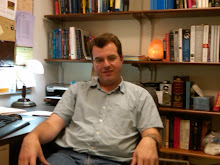
Claude Steele has stepped down as provost at Berkeley, and will return to the faculty. The administration at Berkeley has been under intense scrutiny over their handling of high-profile sexual harassment cases in the past year, and while the announcement of his resignation does not explicitly mention those controversies it is quite reasonable to guess that they were a factor.
I'm blogging about this because Steele is a famous psychologist, best known outside the field for his work on stereotype threat. I do not know enough about the details of those cases and the chain of events inside the administration to say for certain whether Steele deserves criticism, but the issue here is less about specific individual culpability and burdens, and more about assumptions that are "in the air" among academics. Regardless of whether Steele himself made mistakes of sufficient gravity to merit losing his job according to whatever standard you might wish to apply, it seems clear that things could have been handled better than they were. What matters here is that the handling was, at the least, sub-optimal, sitting somewhere along a spectrum that goes from "grossly negligent" to "typical bureaucratic response" to "probably well-intentioned but still not what we need."
In the modern zeitgeist there is a belief that raising awareness of research on bias--including but not limited to subconscious bias--will lead to better behavior, better decision-making, more sensitive people, etc. Now, to my knowledge Steele himself does not explicitly study sexual harassment, but he does study stereotypes and their effects. One can reasonably guess that he is thus more aware than the average academic about the wider literature on bias, sexism, etc. If a raised consciousness were the key to getting people to respond promptly, appropriately, and effectively to acts of sexism, racism, etc. then putting a bias researcher into a position of power would be the surest path to reform. Alas, it seems that bias researchers are as human as anyone else. Having lots of "is" knowledge about how bias works does not lead them to act as they "ought" when faced with a professional challenge.
This should not be a surprise. Jonathan Haidt noted in The Righteous Mind that academics who study ethics are no more ethical than anyone else. I'm from a family full of health professionals, and some of them have all sorts of unhealthy habits. I'm in a profession of educated people and some of them are anti-intellectual.
There's a separation between what we know intellectually and what we carry into practice. That's certainly an indictment of my profession, including the traditionalists and the progressives alike, because studying something, even in-depth and for years, doesn't always transform people as you'd hope. At the same time, I'd like to selfishly and shamelessly argue that it reflects even worse on the progressives than the traditionalists, because I think the traditionalists are more willing to treat problems as hard, whereas the progressives hold out hope for secret tricks and correct politics. A traditionalist social scientist wants to understand people, while a reformer wants to fix them. It's the difference between science and engineering. Most news articles about "According to a new study..." (including the one I linked to at the beginning of this post) are written to satisfy a curiosity about how to act, not merely to help the reader understand why people act as they do.
So, I don't claim to know anything about how things were handled (or mishandled) behind the scenes at Berkeley, but at the very least I am unsurprised that a bias researcher would not be any better than the rest of the world when it comes to responding to sexism. All of the "is" statements in the world cannot change a person's "oughts." Only "ought" statements can do that. Social scientists cannot save us any more than priests can. Only you can save your soul. Priests and social scientists can advise you, but only you can decide your actions.
Showing posts with label Stereotype threat. Show all posts
Showing posts with label Stereotype threat. Show all posts
Sunday, April 24, 2016


Monday, January 11, 2016
de Tocqueville on the American approach to intellectual questions
Volume 2 is all about American culture. I expect to be blogging far more about Volume 2 than I did about Volume 1. Indeed, Part 1 of the volume is titled "The influence of democracy upon the intellectual movement in the United States." Chapter 1 is titled "The Americans' philosophic method".
de Tocqueville's basic point is that we are an unlettered and practical people, so the average American will approach an intellectual question based only on his own ideas and intuitions, rather than in reference to intellectual schools of thought. An educated American will not say "Well, if we approach this question in the manner of [insert name here]..." but will simply give his own thoughts. Obviously this is less true today than it was in the 1830's, especially due to the rise of great universities in America. And obviously this is more true in the natural sciences than in the humanities or social sciences.
I don't think that I can fairly speak to a line of causation from the state of 1830's America to the modern academic zeitgeist that I so often lament on this blog. There are far too many widely-read scholars today for me to attempt a serious argument that American academia remains a refuge for the unlettered. What I can note, however, is a set of analogies between the things that de Tocqueville noted in the wider society and the problems that I see today in the zeitgeist of academic scientists in America.
For starters, when I read science education research written by natural scientists the trail of citations is often (but not always) very modern and technocratic, and focused on writings from and about the natural sciences, rather than a wider context of social science and culture. I notice less of that in psychology papers. Science education research in America seems to be stuck in a mode described on page 494 of Democracy in America:
Also, much of the conversation about science education in the US is really a conversation about inequality (often explicitly so). It is relevant that de Tocqueville wrote (again on page 494):
de Tocqueville's commentary about how little Americans know about the writers of the past is particularly interesting if read alongside Keynes' famous remark about ideology:
Finally, related to the issue of whether people who eschew the zeitgeist are eschewing evidence, something making the rounds right now is a statistical critique of "stereotype threat" research by Rutgers psychology professor Lee Jussim, whose book was previously blogged about here. Stereotype threat research is often cited as a key factor underpinning persistent inequality, and a reason why biases and stereotypes are so pervasive and overpowering. I lack the context and background to decide if Jussim's critique of that research is satisfactory or deficient, but I think it's compelling enough that one should not make that line of research an overly prominent piece of their world-view.
de Tocqueville's basic point is that we are an unlettered and practical people, so the average American will approach an intellectual question based only on his own ideas and intuitions, rather than in reference to intellectual schools of thought. An educated American will not say "Well, if we approach this question in the manner of [insert name here]..." but will simply give his own thoughts. Obviously this is less true today than it was in the 1830's, especially due to the rise of great universities in America. And obviously this is more true in the natural sciences than in the humanities or social sciences.
I don't think that I can fairly speak to a line of causation from the state of 1830's America to the modern academic zeitgeist that I so often lament on this blog. There are far too many widely-read scholars today for me to attempt a serious argument that American academia remains a refuge for the unlettered. What I can note, however, is a set of analogies between the things that de Tocqueville noted in the wider society and the problems that I see today in the zeitgeist of academic scientists in America.
For starters, when I read science education research written by natural scientists the trail of citations is often (but not always) very modern and technocratic, and focused on writings from and about the natural sciences, rather than a wider context of social science and culture. I notice less of that in psychology papers. Science education research in America seems to be stuck in a mode described on page 494 of Democracy in America:
Amid the continuous shifts which prevail in the heart of a democratic society, the bond which unites generations to each other becomes slack or breaks down; each person easily loses the trail of ideas coming from his forbears or hardly bothers himself about it.A tempting response would be that science education research in the United States is a young field, but that seems inaccurate to me. Perhaps the current approach to science education research in America is rather new, but the choices of questions and methods are inevitably informed by a cultural backdrop. (Indeed, is that not the essence of the modern zeitgeist among the educated classes?) American attitudes toward science and science education emerge from centuries-old cultural attitudes concerning "practical education", and assumptions about our "STEM Workforce" needs are fundamental assumptions about labor markets. It just so happens that economists have been studying labor markets for longer than physicists have been administering the Force Concepts Inventory, and that government agencies have been making projections about our nation's "STEM Workforce" needs since at least Sputnik, if not earlier. (If I ever get through the thick pile of books on my dining room table, I will add to my blogging projects Michael Teitelbaum's Falling Behind?: Boom, Bust, and the Global Race for Scientific Talent. In the meantime, here's a good essay that he wrote on the matter.)
Also, much of the conversation about science education in the US is really a conversation about inequality (often explicitly so). It is relevant that de Tocqueville wrote (again on page 494):
As for the effect which one man's intelligence can have upon another's, it is of necessity much curtailed in a country where its citizens, having become almost like each other, scrutinize each other carefully and, perceiving in not a single person in their midst any signs of undeniable greatness or superiority, constantly return to their own rationality as to the most obvious and immediate source of truth.Those of us who question the prevailing zeitgeist are often accused of being the ones who fall into that folly of privileging their own reason above the findings of others. After all, the zeitgeist is supported by data! Well, yes, by some data, but data rarely tells you as much as it would like you to, so it can only be interpreted in light of assumptions. The person acting only on their own reasoning faculties suffers the disadvantage of being unrooted from the past (though they rarely perceive it as disadvantage) but suffers the advantage of not being sucked into the mistaken assumptions of their peers.
de Tocqueville's commentary about how little Americans know about the writers of the past is particularly interesting if read alongside Keynes' famous remark about ideology:
“The ideas of economists and political philosophers, both when they are right and when they are wrong are more powerful than is commonly understood. Indeed, the world is ruled by little else. Practical men, who believe themselves to be quite exempt from any intellectual influences, are usually slaves of some defunct economist.”American intellectuals may style themselves to be people who simply follow the best evidence rather than people proceeding on the basis of assumptions and culture (even while simultaneously embracing a postmodern zeitgeist about how culturally biased we all are), but their lack of grounding in the writings of the past only makes it easier for them to sit in thrall to older currents. I can't say that I'm free of influence from the past, but my reading projects of the past year (detailed on this blog) have made it somewhat easier for me to identify and articulate the influences that drive me and the influences that I recoil from. The fact that I can identify both Catholic and Puritan influences on my mindset does not make me any less influenced by them, but at least it helps me explore ideas more carefully.
Finally, related to the issue of whether people who eschew the zeitgeist are eschewing evidence, something making the rounds right now is a statistical critique of "stereotype threat" research by Rutgers psychology professor Lee Jussim, whose book was previously blogged about here. Stereotype threat research is often cited as a key factor underpinning persistent inequality, and a reason why biases and stereotypes are so pervasive and overpowering. I lack the context and background to decide if Jussim's critique of that research is satisfactory or deficient, but I think it's compelling enough that one should not make that line of research an overly prominent piece of their world-view.
Subscribe to:
Posts (Atom)